
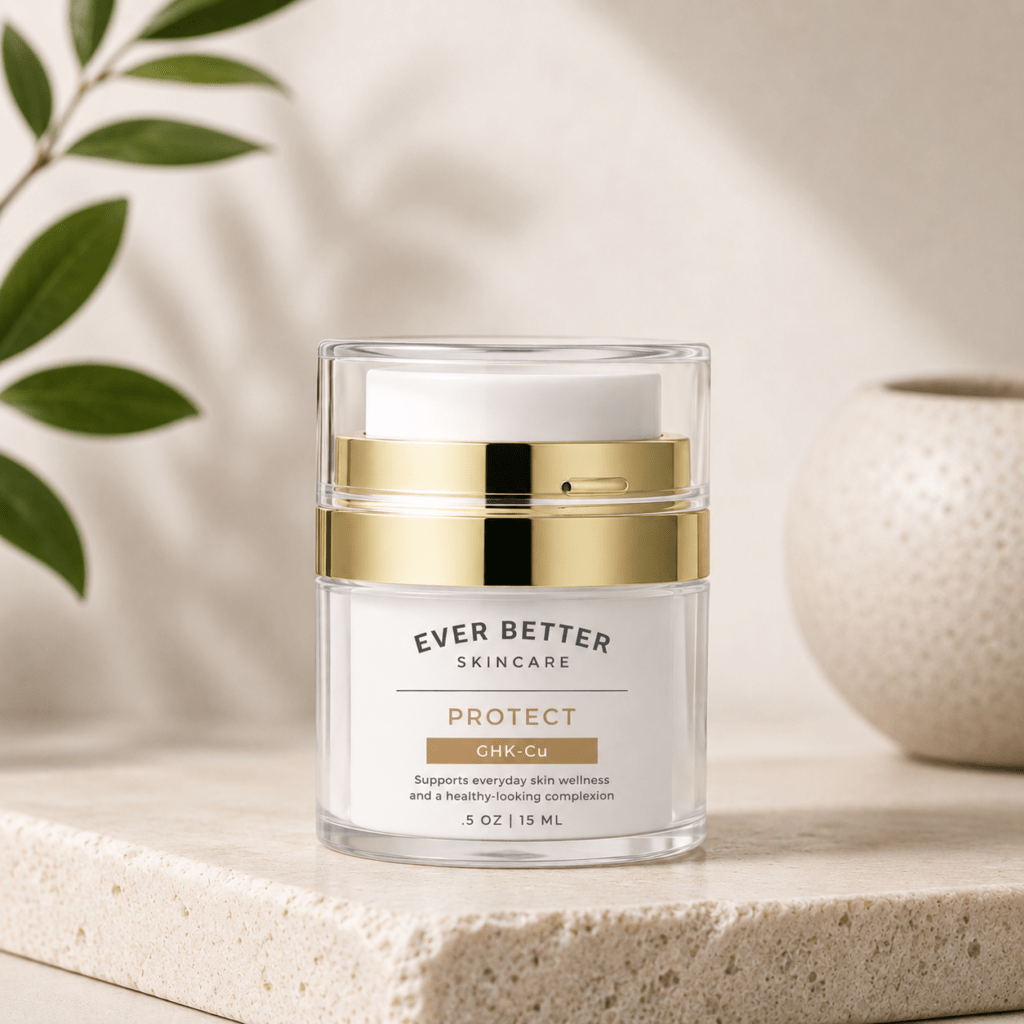
If you’ve shopped for skincare in the last few years, you’ve probably seen the word “peptide” everywhere, on serums, moisturizers, eye creams, even body lotion. But what actually is a peptide, and why do so many effective skincare products build around them? This guide breaks it down from the very beginning, so you can understand exactly what you’re putting on your skin and why it matters.
What Is a Peptide, Exactly?
Your skin is held together and given its structure by proteins, mainly collagen and elastin. Proteins, in turn, are built from long chains of smaller building blocks called amino acids. When a handful of amino acids link together in a short chain, that short chain is called a peptide. Peptides are essentially fragments or “mini versions” of the proteins your skin already makes and relies on.
Because peptides are so much smaller than full proteins, they can penetrate the skin’s surface more easily when applied topically. Once absorbed, certain peptides can act like chemical messages, prompting skin cells to behave a certain way, for example, encouraging the appearance of firmer texture, or helping to calm visible stress and irritation.
How Do Peptides Work in Skincare?
Think of peptides as tiny signals rather than raw materials. Unlike an ingredient like hyaluronic acid (which physically holds water in the skin) or an exfoliating acid (which resurfaces the skin’s outer layer), most cosmetic peptides work by communicating with skin cells, essentially “telling” them to behave in ways associated with healthier-looking, more resilient skin.
This is part of why peptides are often paired with other ingredients rather than used alone: peptides send the signal, while humectants, oils, and antioxidants provide the hydration and environmental protection that let skin actually act on that signal.
Types of Peptides You’ll See in Skincare
Not all peptides do the same job. Broadly, cosmetic peptides fall into a few functional categories:
- Signal peptides: help support the skin’s natural production of structural proteins like collagen.
- Carrier peptides: help deliver trace minerals (like copper) to the skin, supporting a variety of visible benefits.
- Neurotransmitter-affecting peptides: help relax the look of repeated-motion expression lines, similar in concept (though much gentler) to how injectable treatments work.
- Enzyme-inhibiting peptides: help slow the breakdown of existing collagen, supporting skin’s structure over time.
Every peptide in our formulas falls into one of these categories, chosen deliberately for what it’s actually good at, not just because “peptide” sounds impressive on a label.
Our Four Signature Peptides
Rather than formulating with dozens of trending ingredients, Ever Better Skincare is built around four peptides, each selected for a specific, well-understood role. Here’s what each one is, where it comes from, and what it’s chosen to do.
GHK-Cu (Copper Peptide): Firming + Skin Vitality
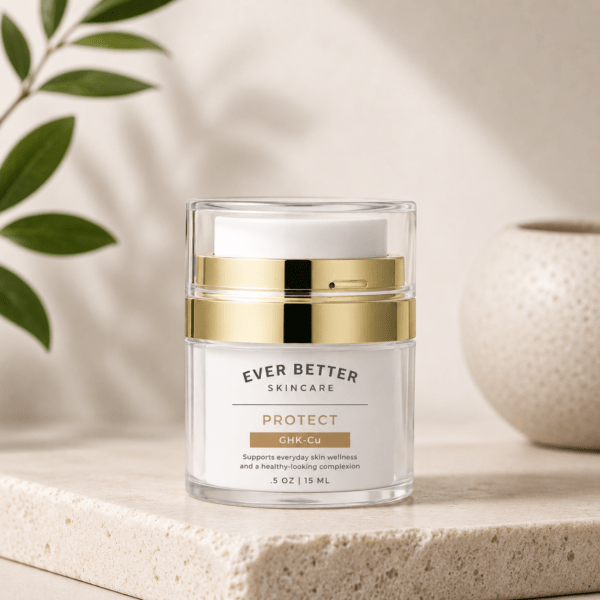
What it is: GHK-Cu is a naturally occurring copper peptide (a small peptide fragment bound to a copper ion) that your body produces in decreasing amounts as you age. It’s one of the most widely studied peptides in cosmetic science, with decades of formulation history.
What it does: As a carrier peptide, GHK-Cu helps deliver copper to skin cells, which is associated with supporting the appearance of smoother, firmer skin and helping improve the look of tone, texture, elasticity, and overall radiance.
Where you’ll find it: Our Protect and Restore formulas, across the Multi-Peptide Recovery Creme, Multi-Peptide Body Creme, and Complete Peptide System.
Snap-8: Expression Line Softening
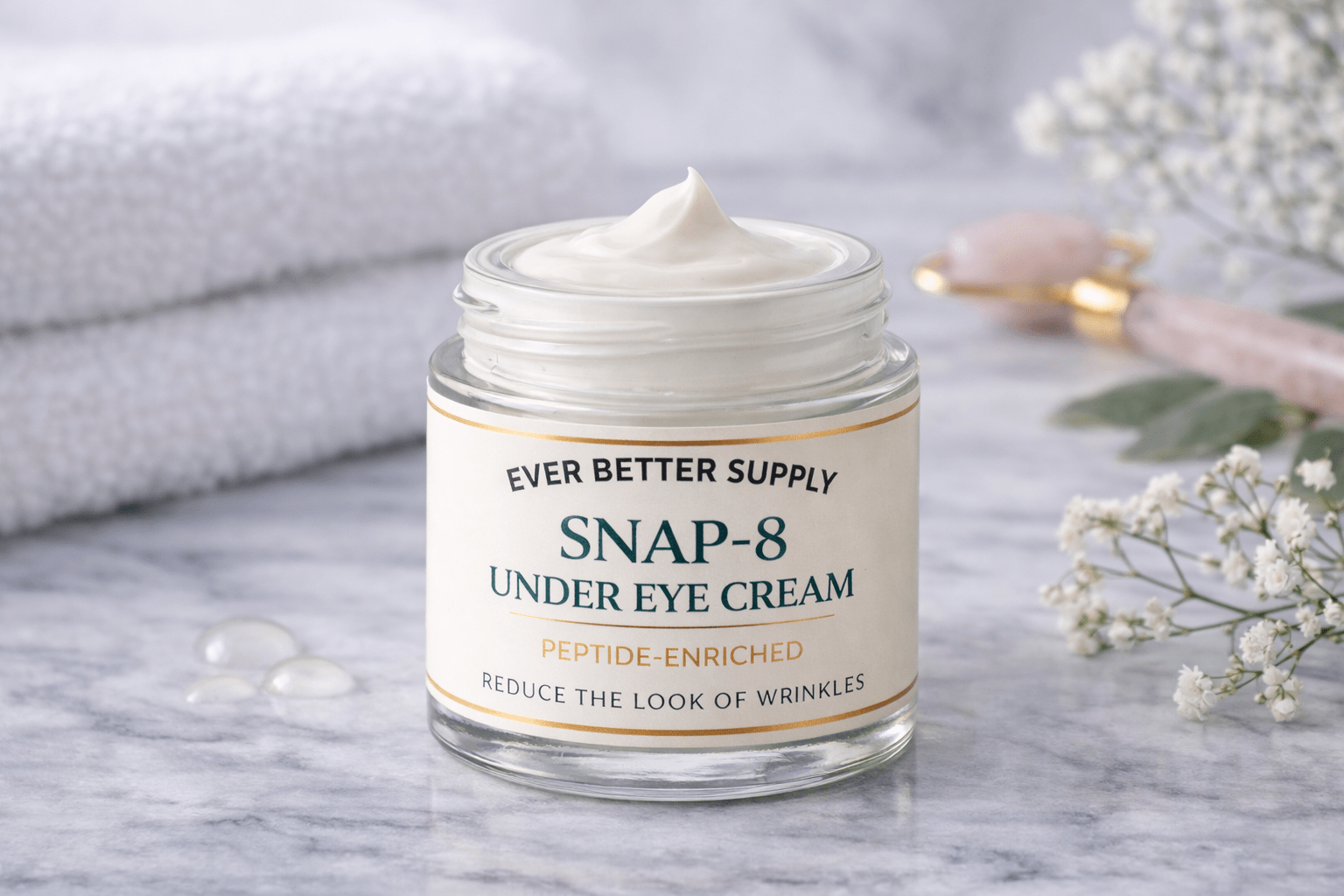
What it is: Snap-8 is a synthetic peptide inspired by the same family as Argireline, designed to interact with the small muscle contractions responsible for repeated-motion expression lines (like crow’s feet or forehead lines).
What it does: By gently interrupting the signal that triggers repetitive muscle contraction, Snap-8 helps reduce the visible appearance of expression lines and promotes a smoother, more refreshed look around the eyes and forehead, without needles.
Where you’ll find it: Our Restore formulas, paired with GHK-Cu for a combined firming-and-smoothing effect.
KPV + BPC-157: Calming + Repair
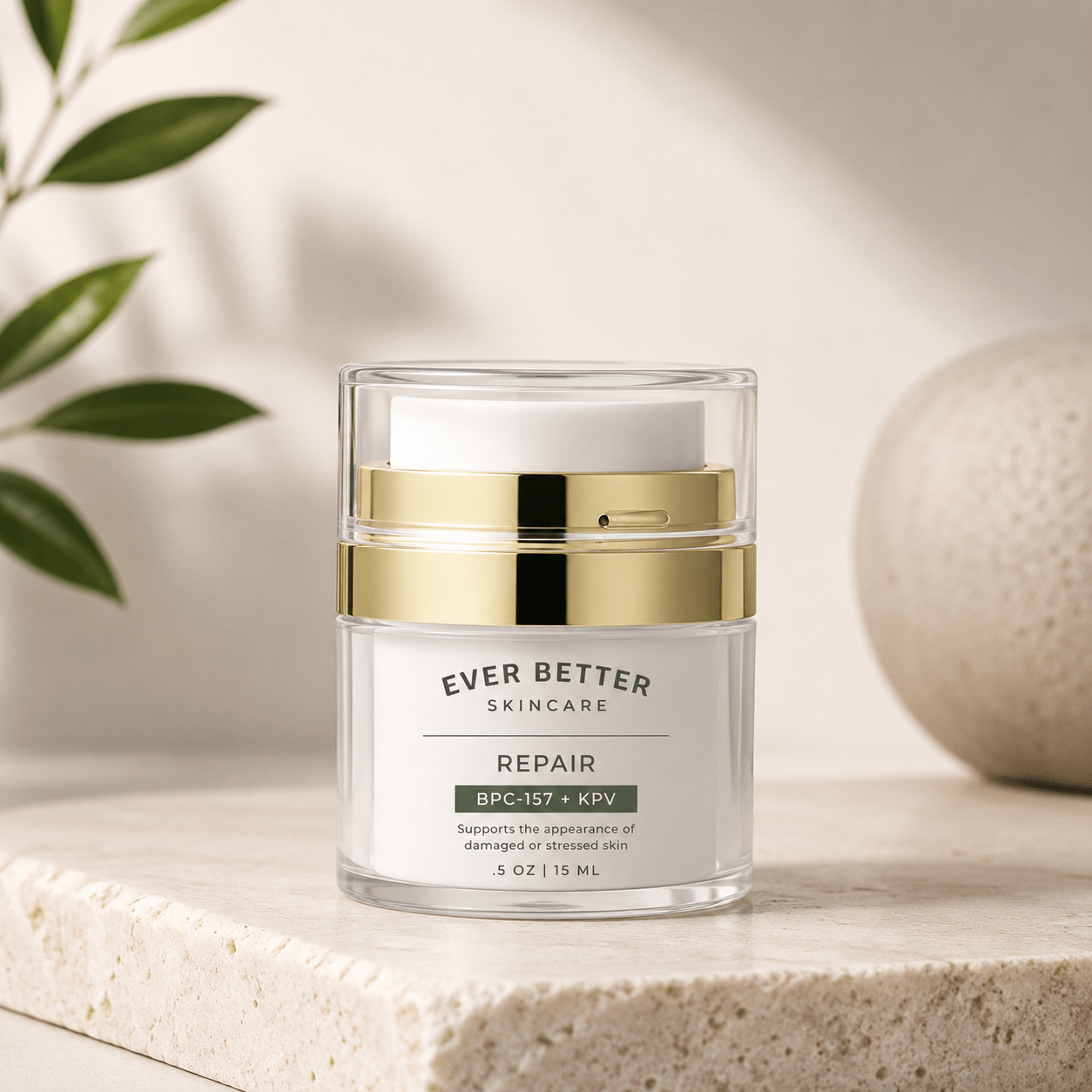
KPV and BPC-157 are formulated together in our Repair formula specifically because their roles complement each other. One calms, one supports resilience.
KPV, what it is: A naturally occurring tripeptide (made of just three amino acids, lysine, proline, and valine) originally identified as a fragment of a larger hormone the body produces.
KPV, what it does: Studied for its calming properties on stressed or irritated-looking skin, KPV helps calm the appearance of stressed, sensitive, or irritated skin while supporting a more balanced, comfortable-looking complexion.
BPC-157, what it is: Short for “Body Protection Compound-157,” a peptide fragment studied for its role in supporting the body’s natural recovery processes.
BPC-157, what it does: In topical skincare, BPC-157 is formulated to support the appearance of restored, healthier-looking skin and help promote the look of a stronger, more resilient skin barrier, ideal for skin that’s dealing with visible stress.
Where you’ll find them: Together in our Repair formula, across the Multi-Peptide Recovery Creme, Multi-Peptide Body Creme, and Complete Peptide System.
How to Add Peptides to Your Routine
Peptides are generally gentle enough for daily use and layer well with the rest of a skincare routine. A simple way to think about the order:
- Cleanse to remove buildup and prep the skin.
- Tone to remove any residue and rebalance the skin.
- Apply serum (like a peptide or antioxidant serum) while skin is still slightly damp, which can help with absorption.
- Finish with a peptide moisturizer or creme to lock in everything underneath and provide lasting hydration.
Peptides pair well with hydrating and antioxidant ingredients, and most people can use them morning and night. As with any new product, we always recommend a patch test first if you have known sensitivities.
Are Peptides Safe for All Skin Types?
Peptides are generally considered one of the gentler categories of active ingredients, since they work by signaling rather than exfoliating or resurfacing the skin. That makes them a reasonable starting point even for those newer to active ingredients, or those who find acids and retinoids too intense. That said, “gentle” doesn’t mean “risk-free” for everyone, if you have specific skin conditions or known allergies, it’s always worth doing a patch test or checking with a dermatologist first.
Common Peptide Myths, Debunked
Myth: More peptides always means a better product. A formula with one or two well-chosen peptides at an effective concentration typically outperforms a formula that lists a dozen peptides in trace amounts.
Myth: Peptides work instantly. Since peptides work by signaling skin cells rather than delivering an immediate physical effect, visible changes in appearance generally build with consistent use over weeks, not overnight.
Myth: Peptides replace the need for sunscreen and hydration. Peptides support skin’s appearance from within its own processes, they don’t replace the basics of sun protection and daily hydration, which remain the foundation of any skincare routine.
Frequently Asked Questions
Do I need to use all four peptides at once?
No. That’s why our line is organized into Repair (KPV + BPC-157), Restore (GHK-Cu + Snap-8), and Protect (GHK-Cu), so you can choose the combination that matches your skin’s current needs rather than using everything at once.
Can I use peptides with retinol or vitamin C?
Generally yes, though we recommend introducing one new active at a time and watching how your skin responds, especially if you have sensitive skin.
How long until I see a difference?
Because peptides work gradually by supporting skin’s own processes, most people look for changes in appearance over 4–8 weeks of consistent, daily use rather than immediately.
Are these peptides vegan and cruelty-free?
Yes, every Ever Better Skincare formula is vegan and never tested on animals.
Not sure which collection is right for you? Take our two-question quiz to find your routine.